Twenty years in hospitality taught me a lot.
One of the lessons that has always stuck with me came from pest control.
The number one thing I drummed into staff was simple:
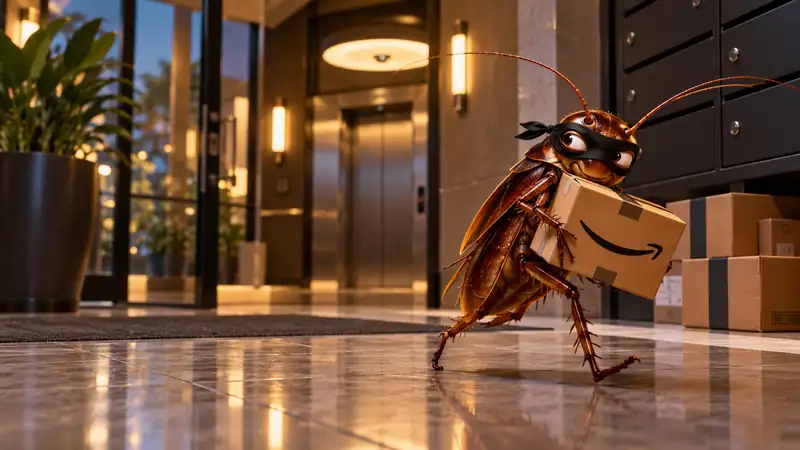
The best form of pest control was making sure we didn’t leave crumbs for the cockroaches.
If the cleaning was done properly, particularly the little things, we could spray once every 12 months.
But I learnt pretty quickly that telling people to clean properly wasn’t enough.
The environment had to make cleaning easy.
A lot of the staff we dealt with were passing through hospitality.
They were at uni, working their first job while they were still at school, or earning some extra money alongside everything else they had going on.
Hospitality wasn’t necessarily their career.
Their priorities were somewhere else.
So you couldn’t design a process that depended on everyone being deeply invested in doing every part of the job perfectly.
You had to make it as easy as possible to do the right thing, and as hard as possible to cut corners.
If there was a gap a broom couldn’t get into easily, that area probably wasn’t getting swept.
You could tell someone to clean it.
You could put it on a checklist.
You could remind them again tomorrow.
Or you could ask why the gap existed in the first place.
That taught me something much broader than pest control.
Good process design takes human behaviour into account.
The structure matters.
The process matters.
And the two have to work together.
I’ve been thinking about that a lot in relation to parcel theft.
When parcels start disappearing from apartment buildings, the natural response is to look at security.
Cameras. Signage. Warnings. Access controls. Maybe another camera pointing at the place where parcels keep getting stolen.
All of those things can have a role.
But I think there’s a more basic question to ask first:
Why are we leaving the crumbs there?
If a delivery process regularly ends with parcels sitting unsecured in a common area, we’ve created the opportunity before any theft takes place.
An unattended parcel is the crumb.
That doesn’t mean every unattended parcel will be stolen, any more than one crumb guarantees a cockroach problem.
It means the conditions are there.
And just like hospitality, fixing those conditions means thinking about both the environment and the person expected to operate within it.
Is there actually a secure place for the parcel to go?
Can the driver get there easily?
Is it obvious where they are supposed to go?
Does the process help them do the right thing?
Or have we created the parcel-delivery equivalent of a gap the broom can’t reach?
Because telling someone what the correct process is doesn’t mean much if following it is difficult, slow or unclear.
People respond to the environment in front of them.
Good systems recognise that.
They don’t rely on every person caring as much as the person who designed the process.
They make the desired behaviour the easiest behaviour.
That’s what we tried to do in hospitality.
Get the physical environment right.
Make cleaning easy.
Remove the places where problems could develop.
Then maintain the process consistently.
Pest control was still part of the system, but it wasn’t being asked to compensate for everything that came before it.
There’s an old saying for a reason:
Prevention is better than cure.
I think parcel security deserves the same thinking.
Design the environment properly.
Design the delivery process around the people actually using it.
Make secure delivery the easy option.
And stop leaving crumbs for the cockroaches.
What have I missed?
Use your name and email. Your email stays private. Comments are moderated before publication.